Why Hard-Blocking YouTube Fails (And the Best Way to Stop Wasting Time)
- digital-wellbeing
- focus
- macos
🚀 Key Takeaways
The Backfire Effect: Completely blocking a website triggers psychological reactance, making the forbidden site more tempting and leading to blocker burnout.
System 1 vs. System 2: Distraction is an automatic, impulsive habit (System 1). Hard blocks create aggressive resistance rather than forcing conscious reflection (System 2).
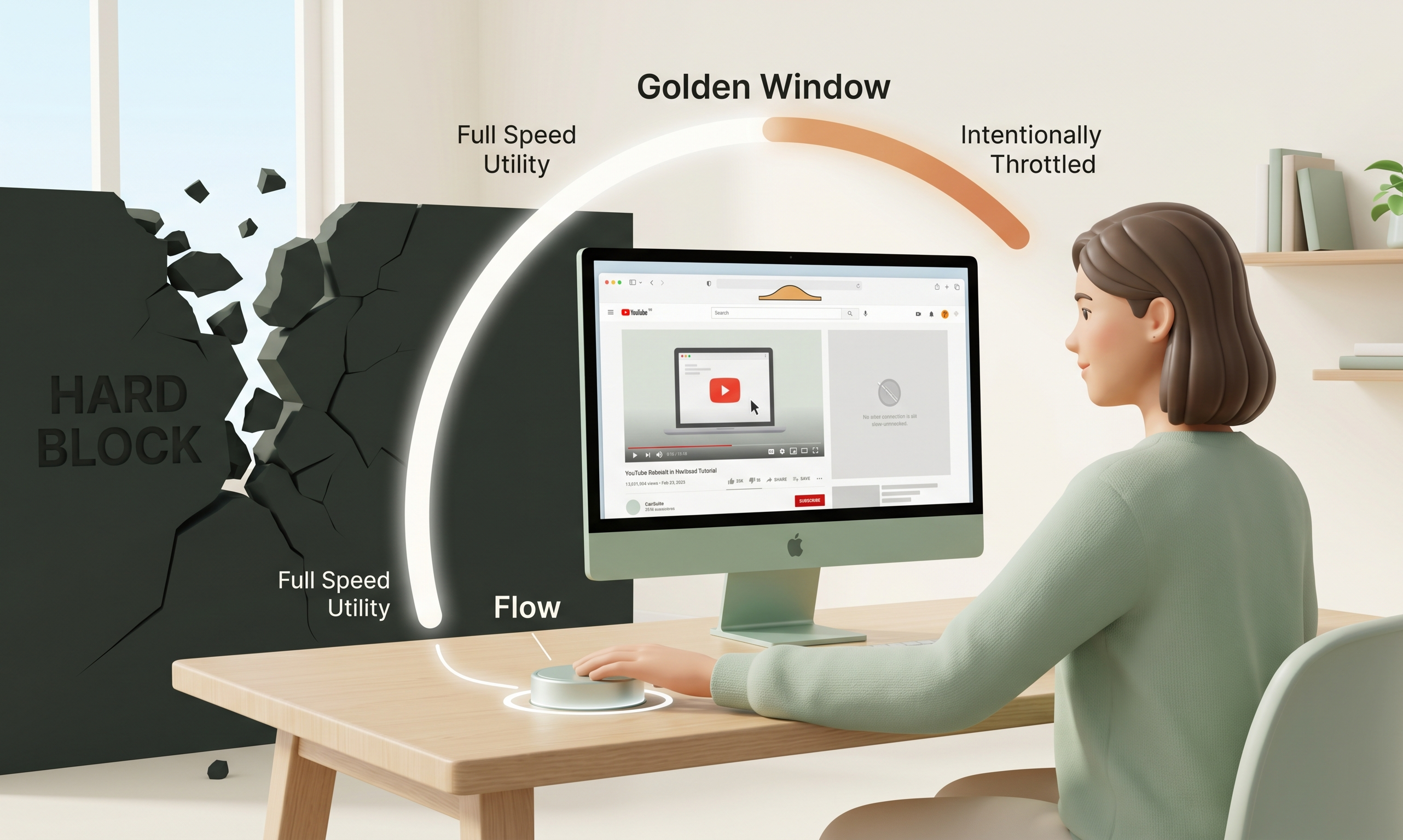
The Speed Bump Solution: Instead of hard-blocking, introducing intentional network friction (slowing the site down) breaks the dopamine loop and helps you build sustainable focus habits.
We've all been there. You're deep into a coding sprint or trying to map out a product strategy on your Mac, and you open a new tab. Before your conscious brain even registers what's happening, you're looking at a YouTube homepage perfectly optimized to hijack your attention for the next 45 minutes.
The standard response? Install a YouTube distraction blocker, slam the digital gate shut, and give yourself a strict zero-second time limit.
But within 48 hours, you find yourself entering your admin password to bypass the block "just this once" to watch a critical AWS tutorial. Three hours later, you're deep in a rabbit hole of video essay archives.
If you've searched for the best website blocker for Mac only to uninstall it a week later, you aren't alone. Why do traditional hard blockers fail us so consistently? The answer lies in human psychology.
The Backfire Effect of Digital Jails
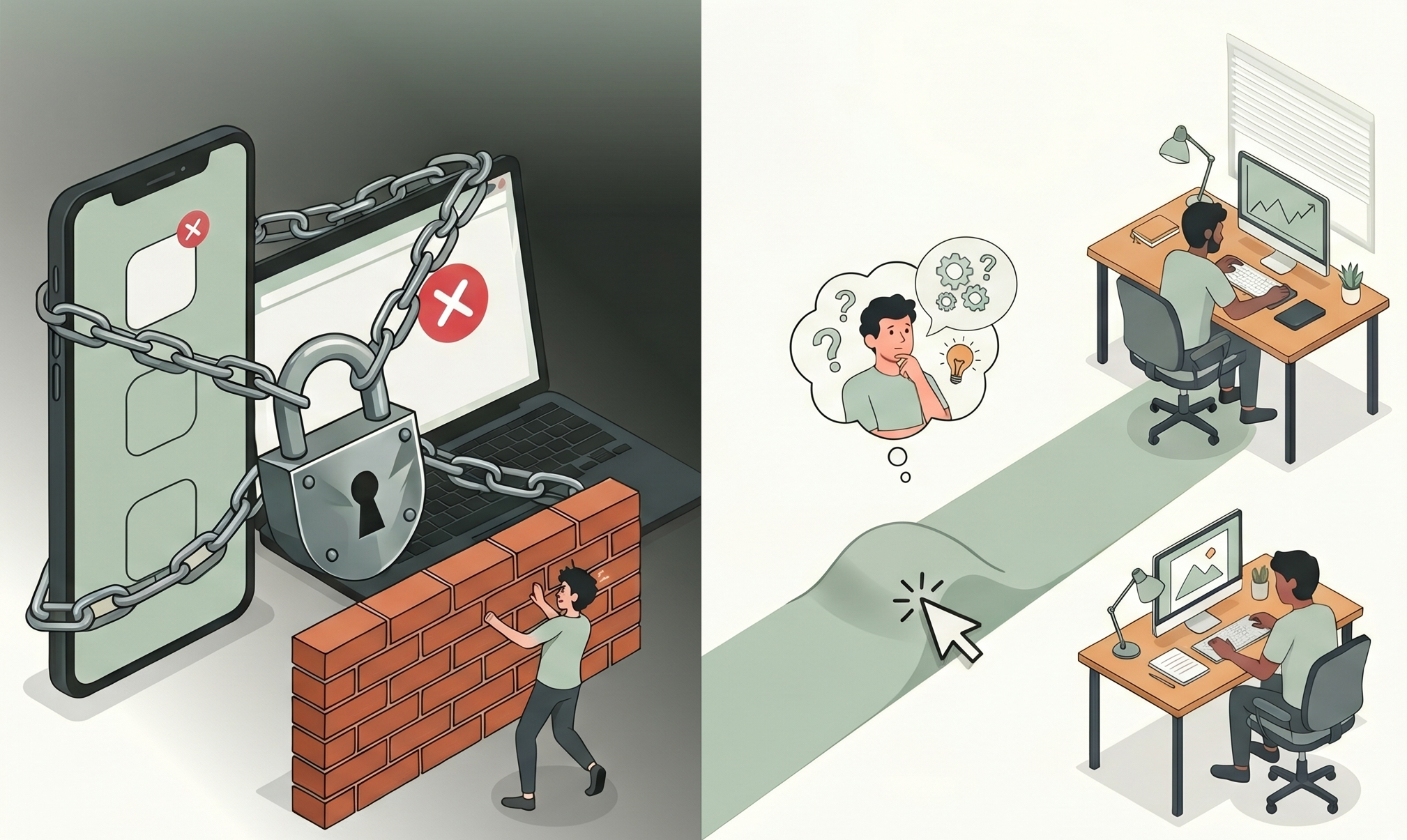
When you completely block YouTube on Mac or any other device, you trigger a psychological phenomenon known as psychological reactance.
- The Reaction: When humans feel their autonomy or freedom of choice is threatened, they experience an intense emotional pushback.
- The Result: Your brain stops looking at YouTube as a simple distraction and starts viewing it as forbidden fruit.
Hard blockers turn your workstation into a digital jail. And what do people do in jail? They plot an escape.
System 1 vs. System 2 Thinking
Learning how to stop wasting time on YouTube isn't a matter of raw willpower. Opening a new tab is rarely a conscious choice; it's a System 1 behavior.
According to behavioral psychology, your brain operates on two systems:
- System 1 (Automatic): Fast, impulsive, and deeply ingrained by millions of dollars of tech platform engineering.
- System 2 (Reflective): Slow, deliberate, and logical.
When you encounter a rigid website blocker, it creates sudden, aggressive resistance. Instead of gently nudging you to evaluate your actions, it forces you into a direct conflict with your own device. The moment your afternoon willpower dips, you turn the blocker off entirely.
Introducing the Speed Bump: A Better YouTube Distraction Blocker
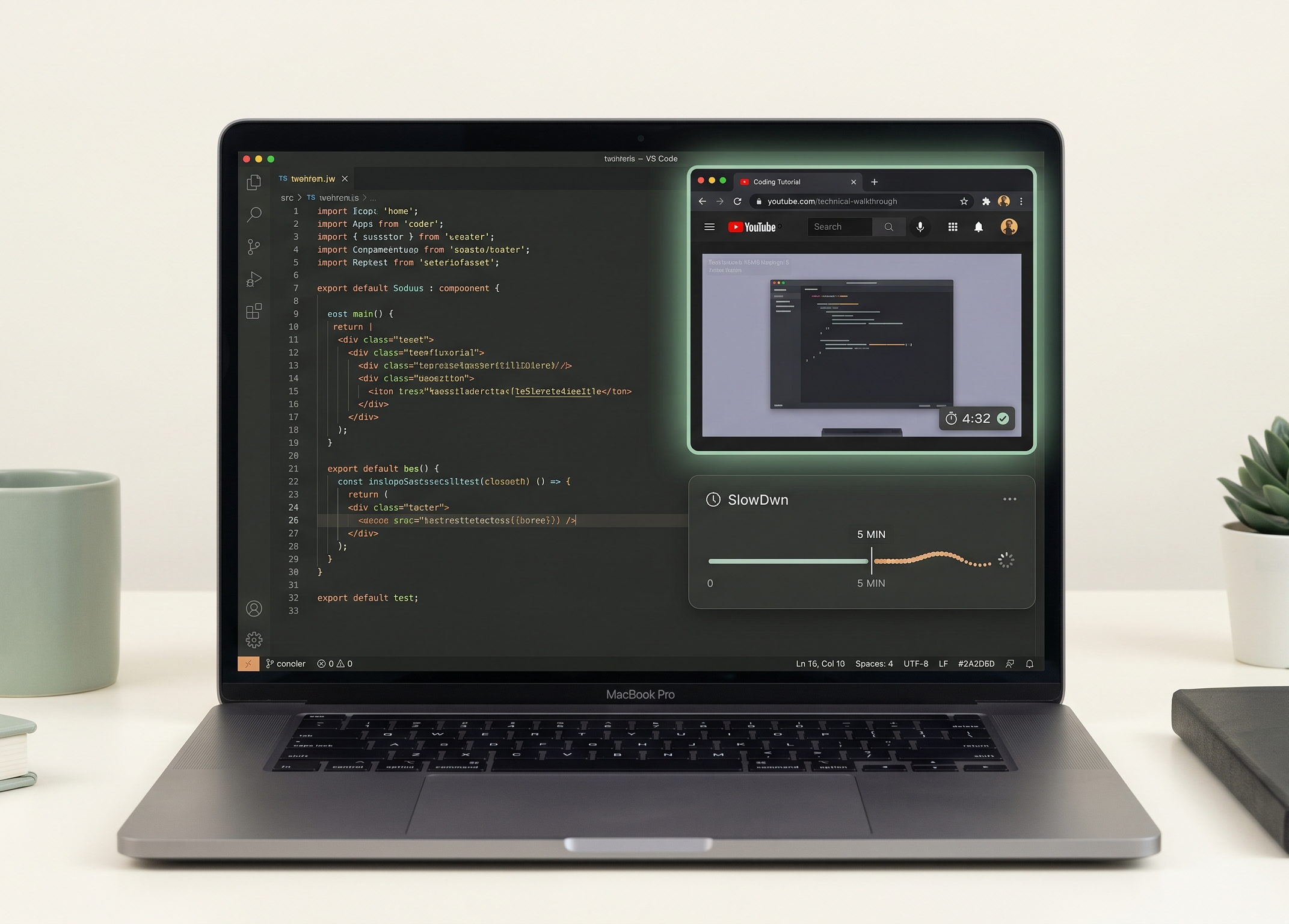
At SlowDwn, we believe the solution to digital distraction isn't to take away your keys—it's to build a speed bump.
Instead of an aggressive hard block, imagine if YouTube simply loaded a tiny bit slower. Imagine if the video took an extra two seconds to buffer, or if the layout felt slightly less responsive.
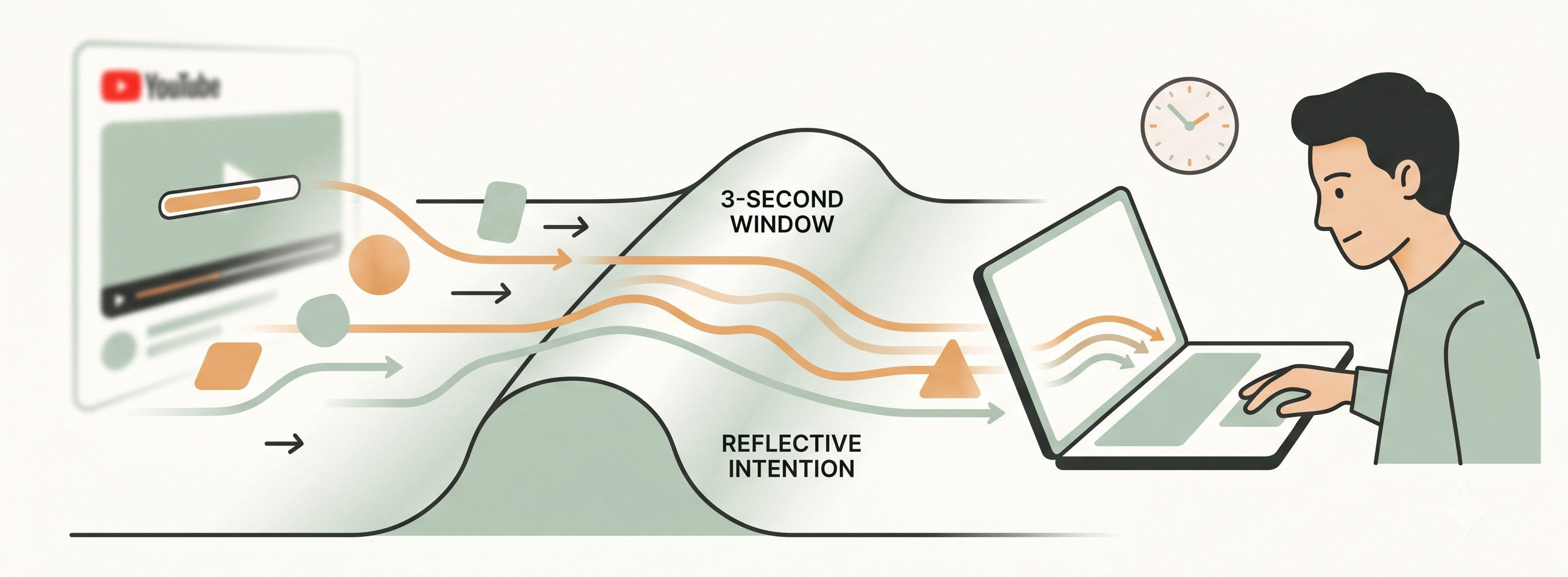
By replacing a hard boundary with intentional network friction, we interrupt the "click-upon-cue" reflex. This simple delay buys you the crucial 3-second window needed to shift from impulsive System 1 drifting to reflective System 2 intention.
Why Intentional Friction Works
- Preserves Autonomy: You can still access necessary tutorials without typing in a frustrating admin override password.
- Kills the Dopamine Loop: It removes the instant gratification that modern websites rely on to hook your attention.
- Builds Sustainable Habits: It trains your brain to self-regulate over time rather than relying on a rigid digital wall.
Don't try to outlaw the destination. Just make the journey annoying enough that your brain decides it's simply not worth the effort.