Why App Blockers Don't Work: Digital Reactance and How to Build Deep Focus
- digital-wellbeing
- focus
- chrome-extension
🚀 Key Takeaways
The Rebound Effect: Traditional app blockers trigger digital reactance—a psychological rebellion that turns blocked apps into "forbidden fruit" and drains cognitive energy through bypass hunting.
System 1 vs. System 2: Digital distractions are automatic, subconscious habits (System 1). Breaking them requires an intentional mental speed bump, not an unyielding wall.
The Power of Micro-Friction: Introducing a brief calm pause after a golden window of normal use activates conscious reflection (System 2), preserving your autonomy while naturally devaluing the compulsion to distract yourself.
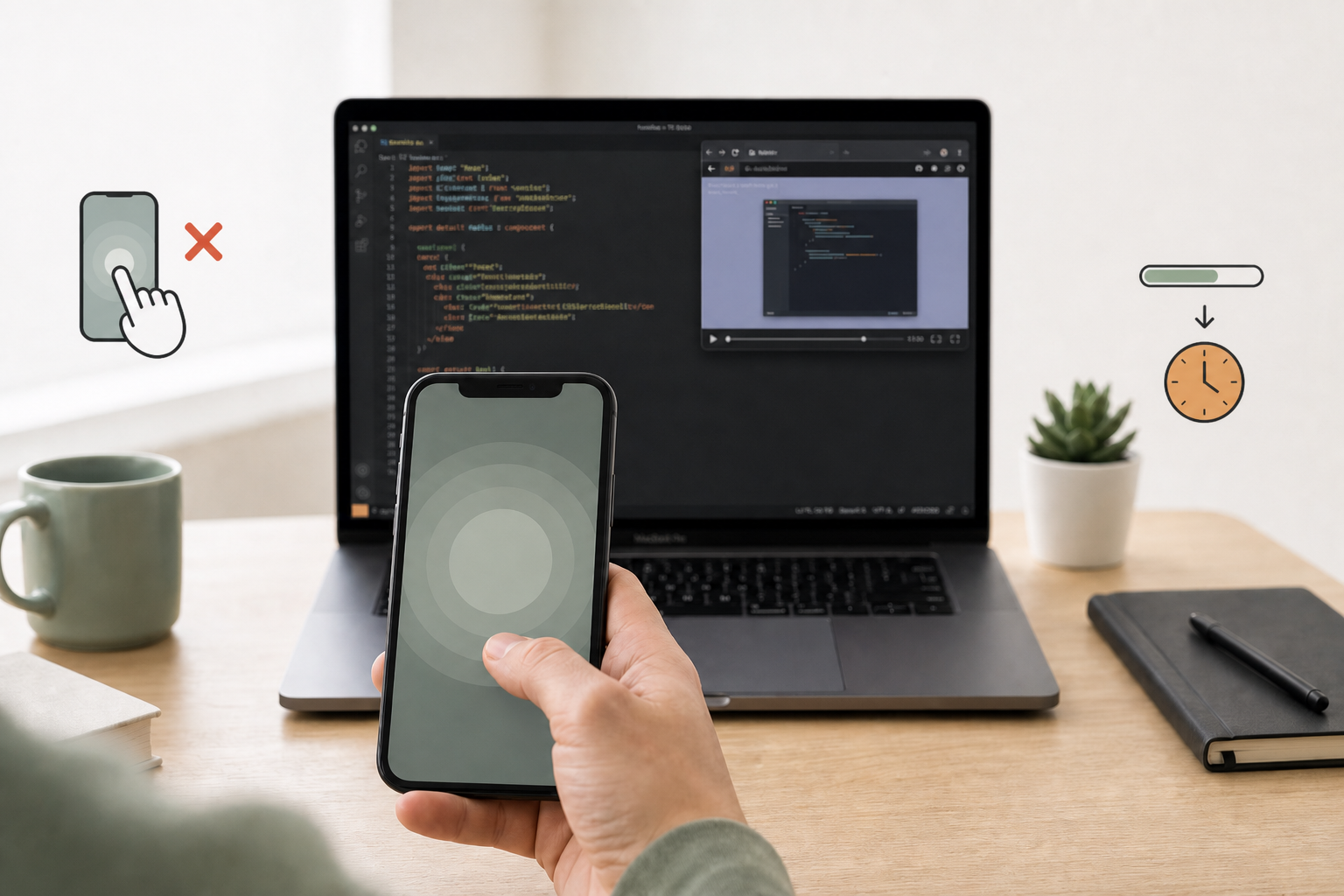
Every knowledge worker knows the routine. You have a critical deadline, a blank IDE, or a complex strategic brief to write. Within ten minutes, your fingers autonomously execute the keyboard shortcuts for Twitter, LinkedIn, or your favorite news site.
To solve this, you install a traditional, hard app blocker. You lock yourself out for four hours. But within thirty minutes, a subtle anxiety creeps in. You need to check a specific DM for a client project, or you simply feel trapped by your own tools. Suddenly, you are disabling the extension, switching browsers, or hunting system settings to bypass your own digital jail.
If this sounds familiar, you aren't lacking willpower. The reality is that strict digital boundaries almost always backfire. To understand why, we have to look at the behavioral psychology behind how our brains respond to restriction.
The Psychology of the Digital Jail: Why App Blockers Don't Work
When you completely block an application, your brain doesn't register a helpful boundary; it registers a threat to its autonomy. This triggers a psychological phenomenon known as psychological reactance theory (first articulated by psychologist Jack Brehm).
Digital Reactance is the emotional brain's rebellious reaction to a perceived loss of freedom. When an individual’s choices are restricted, they experience an intense emotional state that highly motivates them to restore that lost freedom.
Hard blocks turn a simple distracting app into the ultimate forbidden fruit. Instead of focusing on your deep work, you waste valuable cognitive energy fighting your own tools and hunting for workarounds.
Behavioral Friction vs Hard Blocking
To understand how to build deep focus without triggering digital reactance, we need to look at how these two approaches handle our psychological impulses:
| Strategy | Mechanism | Psychological Impact | Long-Term Result |
|---|---|---|---|
| Hard Blocking | Absolute lockout / Wall | Triggers digital reactance; brain senses a threat to autonomy. | Cognitive drain, bypass hunting, and eventual frustration. |
| Behavioral Friction | Calm pause / Speed bump | Triggers System 2 reflection; preserves conscious choice. | Devalues the distraction loop; builds sustainable focus. |
System 1 vs. System 2: Shifting the Behavioral Speed Bump
Most digital distractions occur within System 1—our fast, automatic, frequent, and subconscious mode of thinking, popularized by Daniel Kahneman. The "click-upon-cue" reflex is entirely a System 1 behavior. Your brain spots a brief pause in your coding or writing workflow, and before your conscious mind realizes it, a new browser tab is open.
To break this loop without triggering digital reactance, you don't need an unyielding wall. You need a behavioral speed bump—what practitioners call digital friction.
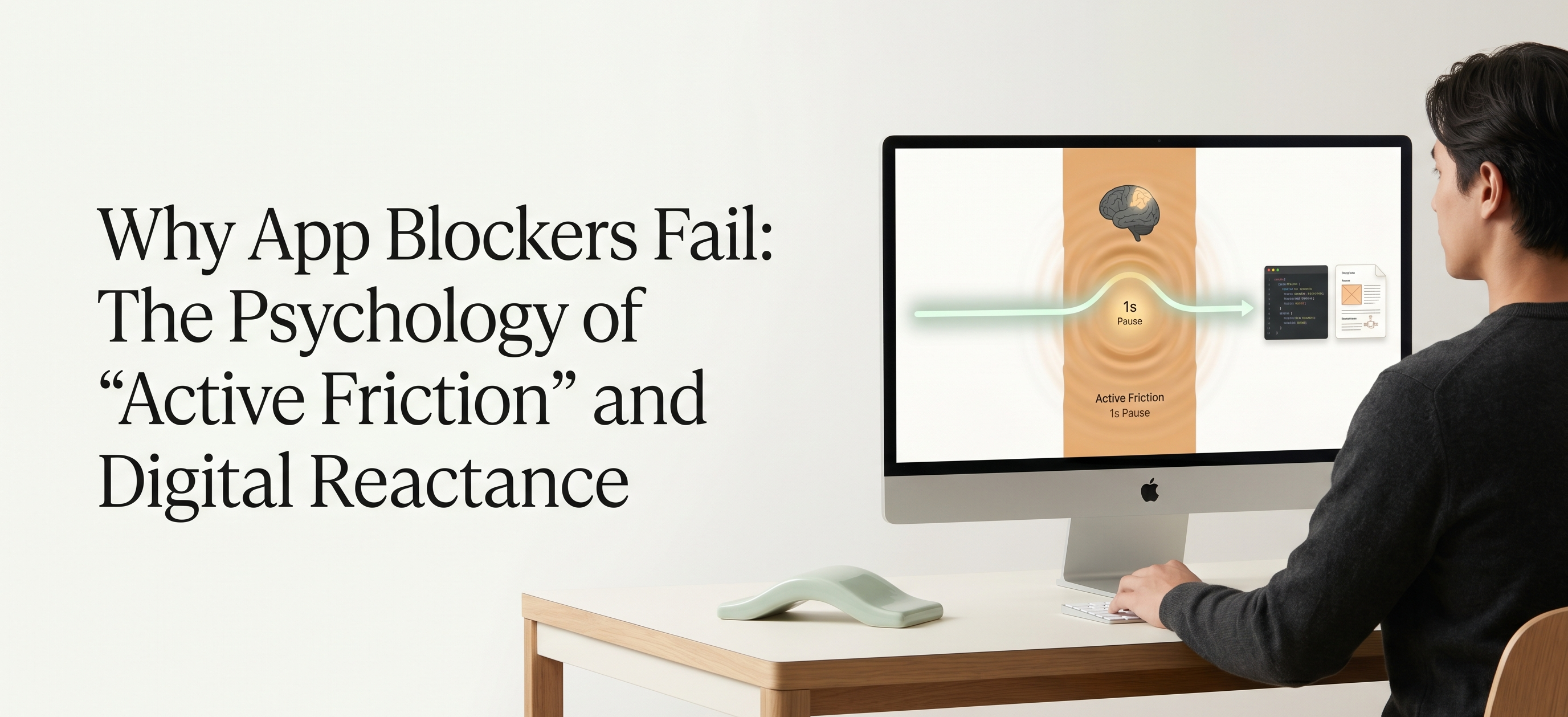
By introducing intentional micro-friction—a golden window of normal use, then a calm pause—we disrupt the seamless dopamine loop that fuels chronic distraction.
- The Seamless Web: Click → Immediate Loading → Dopamine Hit (System 1 reinforced)
- The SlowDwn Approach: Click → Golden window → Calm pause → Consciousness Awakens (System 2 activated)
How to Build Deep Focus Through Active Friction
When a calm pause arrives after a stretch of normal use, your brain is forced into a momentary check-in. In that tiny window of time, your higher cognitive faculties (System 2) catch up with your muscle memory.
This brief pause allows you to ask a conscious question: “Do I actually want to read this thread right now, or am I just avoiding a difficult sentence in my design document?”
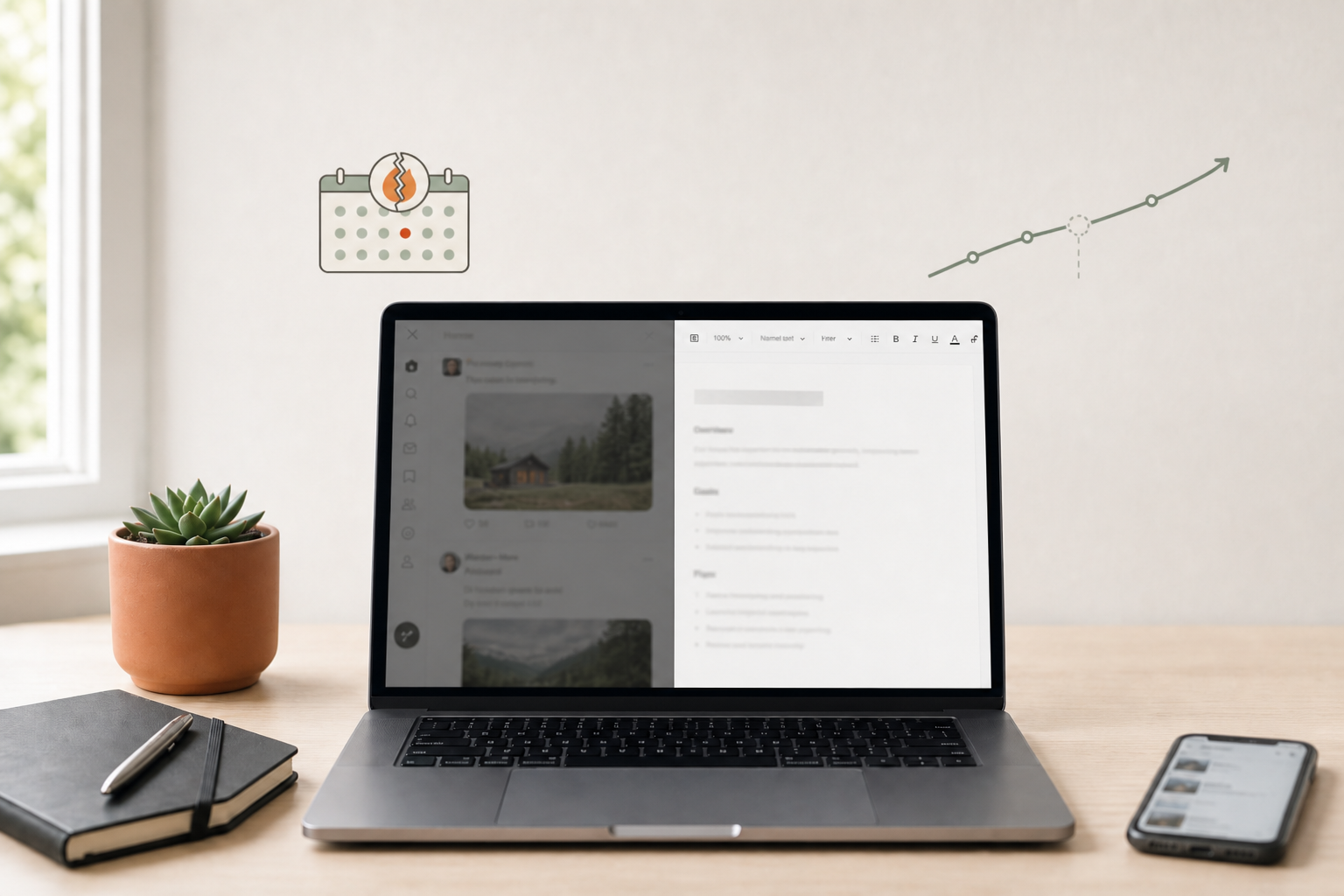
This is where SlowDwn operates. SlowDwn isn't a rigid productivity utility; it is a scientific behavioral intervention—golden windows then calm pauses on browser and phone. Miss a day and the program holds; there are no streaks.
If you truly need to access a site for a functional, work-related reason, you still can. Your autonomy remains entirely intact, which completely bypasses the trap of digital reactance. But because the experience is no longer friction-free, the sub-conscious compulsion is devalued.
Over time, your brain re-maps its associations. It begins to link distracting platforms with mild effort rather than an effortless escape. By choosing behavioral friction vs hard blocking, you stop fighting your own psychology and naturally unlock a sustainable "Time to Think."